A medication check should end with a clear, accountable action
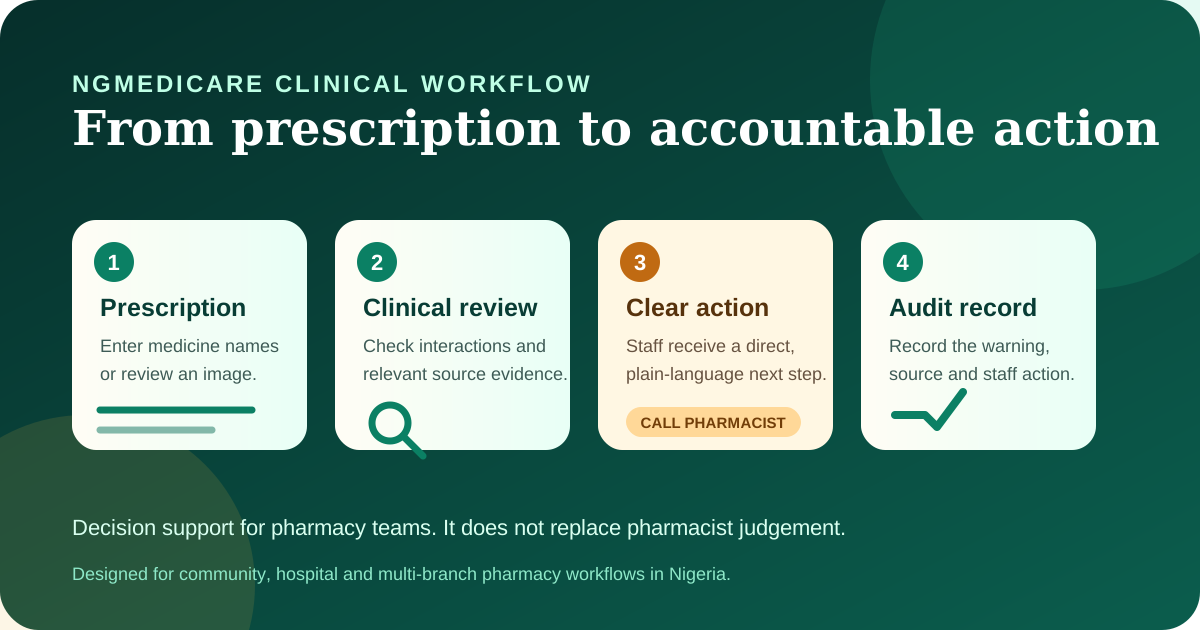
Kenmedicare organizes medication review around one principle: a warning is only useful when the pharmacy team understands the next action, the pharmacist can inspect the evidence and the decision can be reviewed later.
Kenmedicare product facts
- Framework
- CHECK: Capture, Highlight, Escalate, Confirm and Keep
- Designed for
- Community, hospital and multi-branch pharmacy workflows
- Decision maker
- The qualified pharmacist
- Automation role
- Surface risk, severity, evidence and the required escalation
- Record
- Medicines checked, result, evidence and accountable action
- Not included
- Autonomous diagnosis, prescribing or a guarantee of prescription safety
C - Capture the medicines
Authorized staff enter medicine names or use a supported prescription-image workflow. The pharmacy should minimize patient-identifiable information and confirm that the medicine list is complete before relying on the result.
H - Highlight the severity
The system separates clear checks, warnings and denied combinations instead of treating every interaction as equally urgent. This makes the operational consequence visible at the counter.
E - Escalate without ambiguity
Serious results use direct staff actions: hold the medicines, do not supply both and call the pharmacist. The software supports escalation; it does not make the pharmacist's patient-specific decision.
C - Confirm the evidence
The pharmacist can review the source-linked basis for the warning, consider the patient's complete clinical context and decide whether to proceed, change the plan or refer.
K - Keep the accountable record
The check can retain the medicines reviewed, warning status, source and pharmacist action. A reviewable record helps clinical leaders examine workflow adoption, overrides and training needs.
The Kenmedicare point of view
Medication-safety software should optimize for the next safe action, not the largest possible number of alerts. More warnings without prioritization can create noise; clear severity, evidence and accountability create a usable workflow.
Frequently asked questions
What does CHECK stand for?
Capture the medicines, Highlight severity, Escalate appropriately, Confirm the evidence and Keep the accountable record.
Does a clear result prove a prescription is safe?
No. The check covers supported rules and evidence. A pharmacist must still assess patient factors, doses, allergies, contraindications and other relevant information.
Where can I see the workflow?
The public medication-check demonstration uses fictional information and requires no signup.
Book a 15-minute Pharmacy Demo
We’ll walk through a real prescription scenario and show how interactions, warnings, and documentation appear in your workflow.
Evidence-backed clinical decision support for pharmacy teams.